 Help & Contact
 Order Tracking


Poultry Tylosin
Poultry Tylosin for Chickens and Birds
Explore poultry tylosin products and educational information for chickens and other birds. This collection organizes verified tylosin formulations, including powders and water-soluble options, while providing responsible-use guidance for poultry keepers.
What Is Tylosin?
Tylosin is a macrolide-class antibiotic used against certain susceptible bacteria and mycoplasma organisms. It is commonly associated with veterinary management of specific respiratory conditions, but it is not appropriate for every bird displaying sneezing, coughing or breathing changes.
Tylosin does not treat viruses, fungi, worms, mites, coccidia or noninfectious problems caused by dust, ammonia or poor ventilation. Accurate diagnosis is important before treatment begins.
Poultry Tylosin Product Formats
Depending on verified availability and lawful distribution requirements, this collection may include:
- Tylosin soluble powder
- Water-soluble tylosin products
- Tylosin tartrate formulations
- Combination antibiotic powders containing tylosin
- Veterinary-directed or prescription products
- Educational resources about tylosin use in birds
Respiratory Signs Require Accurate Diagnosis
Sneezing, nasal discharge, swollen sinuses, watery eyes, coughing and noisy breathing may have bacterial, viral, fungal, environmental or parasitic causes. These signs alone cannot confirm that tylosin is the correct treatment.
Improve ventilation, reduce dust and ammonia, provide clean drinking water and isolate affected birds when appropriate. Consult an avian or poultry veterinarian when symptoms are severe, persistent or spreading through the flock.
Responsible Tylosin Use
Confirm the product’s active ingredient, concentration, intended species and administration method before use. Follow the complete label or veterinarian’s instructions. Never estimate a dose, mix different tylosin concentrations interchangeably or combine antibiotics without qualified guidance.
Prepare medicated drinking water only when permitted by the product label, and account for reduced water consumption in sick birds. Clean waterers carefully and follow all preparation, storage and replacement instructions.
Laying Hens and Food-Producing Poultry
Not every tylosin product is permitted for chickens producing eggs or meat. Use only products with a lawful U.S. pathway for the intended species and production class. Follow all restrictions and observe every required egg or meat withdrawal period.
A tylosin product marketed for pigeons or pet birds should not automatically be used in food-producing poultry.
Frequently Asked Questions
What type of antibiotic is tylosin?
Tylosin belongs to the macrolide class of antibiotics and acts against certain susceptible bacteria and mycoplasma organisms.
Does tylosin treat every poultry respiratory problem?
No. Respiratory signs may have bacterial, viral, fungal, parasitic or environmental causes. Tylosin is appropriate only when the suspected organism is susceptible and its use is lawful.
Is all tylosin water soluble?
No. Solubility and administration instructions vary by formulation. Use a product in drinking water only when its label specifically permits that method.
Can tylosin be used for laying hens?
Product permissions and withdrawal requirements vary. Confirm that the specific formulation is legally appropriate for laying hens before use.
When should a veterinarian be contacted?
Seek veterinary assistance for open-mouth breathing, severe facial swelling, blue or purple coloration, neurological signs, rapid deterioration or illness affecting multiple birds.


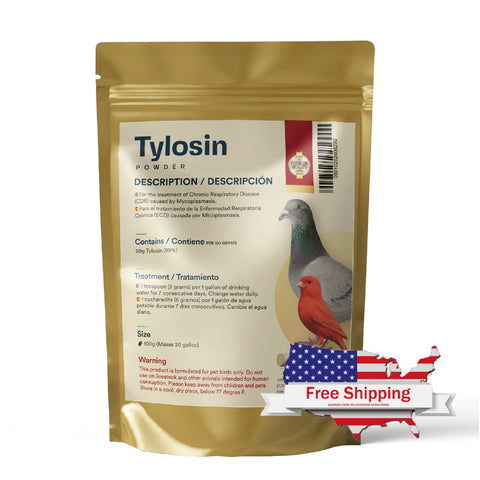

ABOUT THIS COLLECTION
Poultry Tylosin
Read MoreShow Less
Poultry Tylosin for Chickens and Birds
Explore poultry tylosin products and educational information for chickens and other birds. This collection organizes verified tylosin formulations, including powders and water-soluble options, while providing responsible-use guidance for poultry keepers.
What Is Tylosin?
Tylosin is a macrolide-class antibiotic used against certain susceptible bacteria and mycoplasma organisms. It is commonly associated with veterinary management of specific respiratory conditions, but it is not appropriate for every bird displaying sneezing, coughing or breathing changes.
Tylosin does not treat viruses, fungi, worms, mites, coccidia or noninfectious problems caused by dust, ammonia or poor ventilation. Accurate diagnosis is important before treatment begins.
Poultry Tylosin Product Formats
Depending on verified availability and lawful distribution requirements, this collection may include:
- Tylosin soluble powder
- Water-soluble tylosin products
- Tylosin tartrate formulations
- Combination antibiotic powders containing tylosin
- Veterinary-directed or prescription products
- Educational resources about tylosin use in birds
Respiratory Signs Require Accurate Diagnosis
Sneezing, nasal discharge, swollen sinuses, watery eyes, coughing and noisy breathing may have bacterial, viral, fungal, environmental or parasitic causes. These signs alone cannot confirm that tylosin is the correct treatment.
Improve ventilation, reduce dust and ammonia, provide clean drinking water and isolate affected birds when appropriate. Consult an avian or poultry veterinarian when symptoms are severe, persistent or spreading through the flock.
Responsible Tylosin Use
Confirm the product’s active ingredient, concentration, intended species and administration method before use. Follow the complete label or veterinarian’s instructions. Never estimate a dose, mix different tylosin concentrations interchangeably or combine antibiotics without qualified guidance.
Prepare medicated drinking water only when permitted by the product label, and account for reduced water consumption in sick birds. Clean waterers carefully and follow all preparation, storage and replacement instructions.
Laying Hens and Food-Producing Poultry
Not every tylosin product is permitted for chickens producing eggs or meat. Use only products with a lawful U.S. pathway for the intended species and production class. Follow all restrictions and observe every required egg or meat withdrawal period.
A tylosin product marketed for pigeons or pet birds should not automatically be used in food-producing poultry.
Frequently Asked Questions
What type of antibiotic is tylosin?
Tylosin belongs to the macrolide class of antibiotics and acts against certain susceptible bacteria and mycoplasma organisms.
Does tylosin treat every poultry respiratory problem?
No. Respiratory signs may have bacterial, viral, fungal, parasitic or environmental causes. Tylosin is appropriate only when the suspected organism is susceptible and its use is lawful.
Is all tylosin water soluble?
No. Solubility and administration instructions vary by formulation. Use a product in drinking water only when its label specifically permits that method.
Can tylosin be used for laying hens?
Product permissions and withdrawal requirements vary. Confirm that the specific formulation is legally appropriate for laying hens before use.
When should a veterinarian be contacted?
Seek veterinary assistance for open-mouth breathing, severe facial swelling, blue or purple coloration, neurological signs, rapid deterioration or illness affecting multiple birds.
Poultry Tylosin for Chickens and Birds Explore poultry tylosin products and educational information for chickens and other birds. This collection organizes verified tylosin formulations, including powders and water-s...
